Why use art for therapy
Why Art-
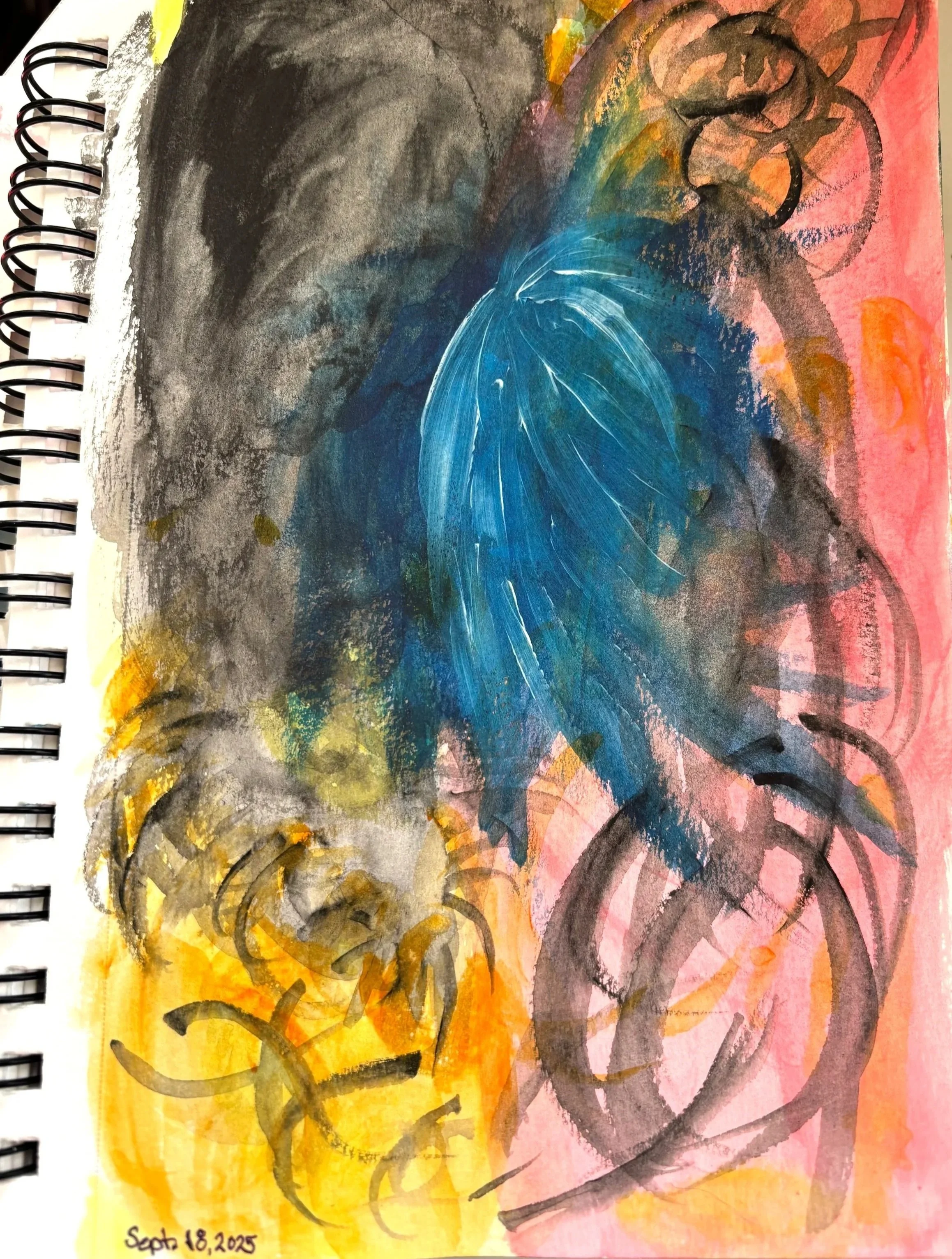
This exercise isn’t about creating a piece of art to show anyone else. Instead, we can use art to help us connect the body and mind. Symbolism can reveal things we might not access through just words, and assist us in brining attention and deepen our understanding of our internal world.
There are multiple reasons to use art in therapy. Some of them include (Hinz, 2019):
Connecting the mind to external sensations which opens the disucssion for coping
Build mindfulness into the session
Support older adults experiencing cognitive decline by linking them to past experiences and helping with grounding
Explore and honour inner sensations
Now lets try it:
First grab a plain piece of paper, colouring pencils, markers or paint and a pen.
Take a deep breath, and slowly scan your body. On a scale of one - ten, rate where you are right now.
One is completely relaxed, happy and content
Ten is highly stressed, angry or irritable.
Close your eyes and think of the first three words to describe your feelings right now
Pick one of the words and pick a colour that corresponds to that word or emotion.
Think about what shape this word brings to mind, is it sharp and pointy or soft and smooth, something else
Using your supplies spend a moment putting this onto paper. It could be the word it’s self, a shape, an image or even just a blob.
Repeat for as many of the words/ feelings you have choosen as you would like.
Take a breath and now rate yourself on a scale of one - ten. Has this changed? Stayed the same? Be curious about the process and what thoughts come up.
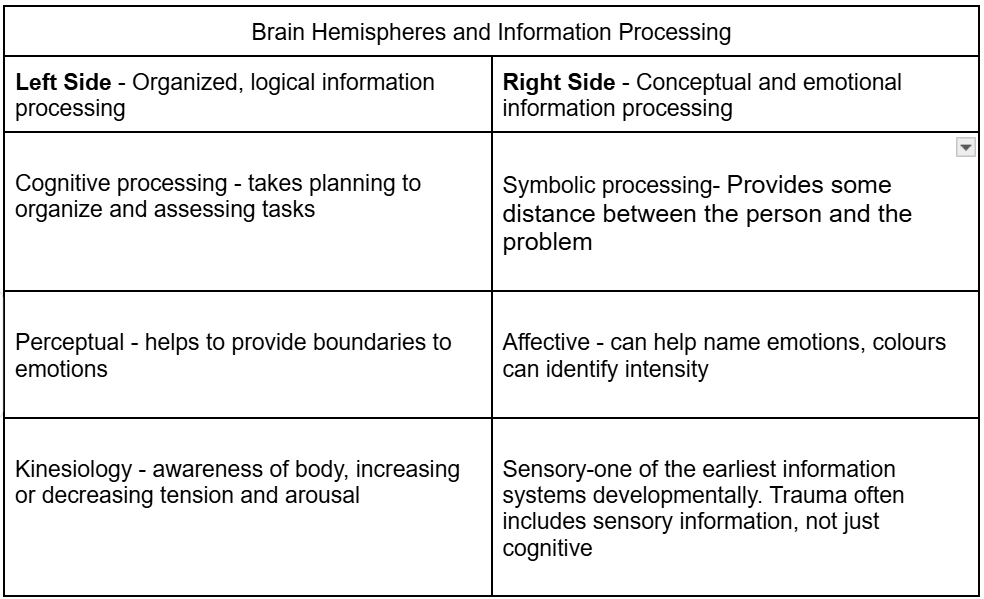
Art can engage multiple levels of therapy or information processing (Hinz, 2019):
Remember these are cues to start the process but there isn’t one ‘right way’. It’s about the journey, not the end product.